Ta'az Digital Platform
One self-service place, in Hebrew, for Ta'az's official information, and the platform that runs it.
- Idan Achrak — Team lead and lead developer: brief, design, code, reviews and deployment
- Mazal Avitbul — Developer: the notification service and the local development setup
01 / The challenge
Ta'az's official information lived on an outdated SharePoint site. It was scattered and out of date, so HR staff, commanders and employees who needed a procedure or a simple answer phoned or messaged the HR teams instead. That was slow for them, a steady load on the staff, and the answers were not always the same.
Ta'az needed a single, always-available source of truth that its own content team could run, where nothing goes up before it is approved, and that installs and runs on a closed network with no internet.
- Information scattered and out of date
- Routine questions went to HR staff by phone
- Answers were not always consistent
- Everything had to run on a closed network
02 / What I built
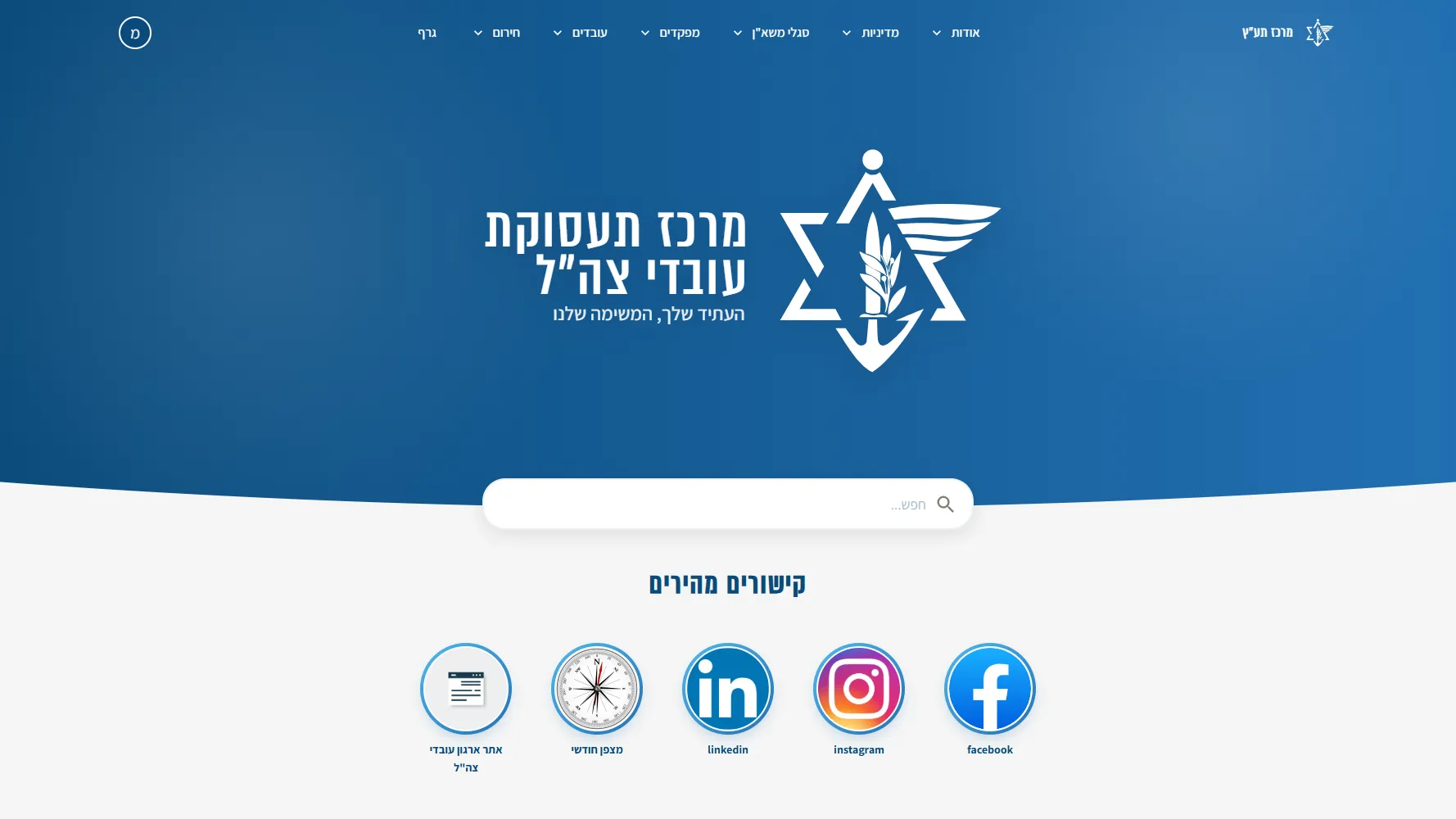
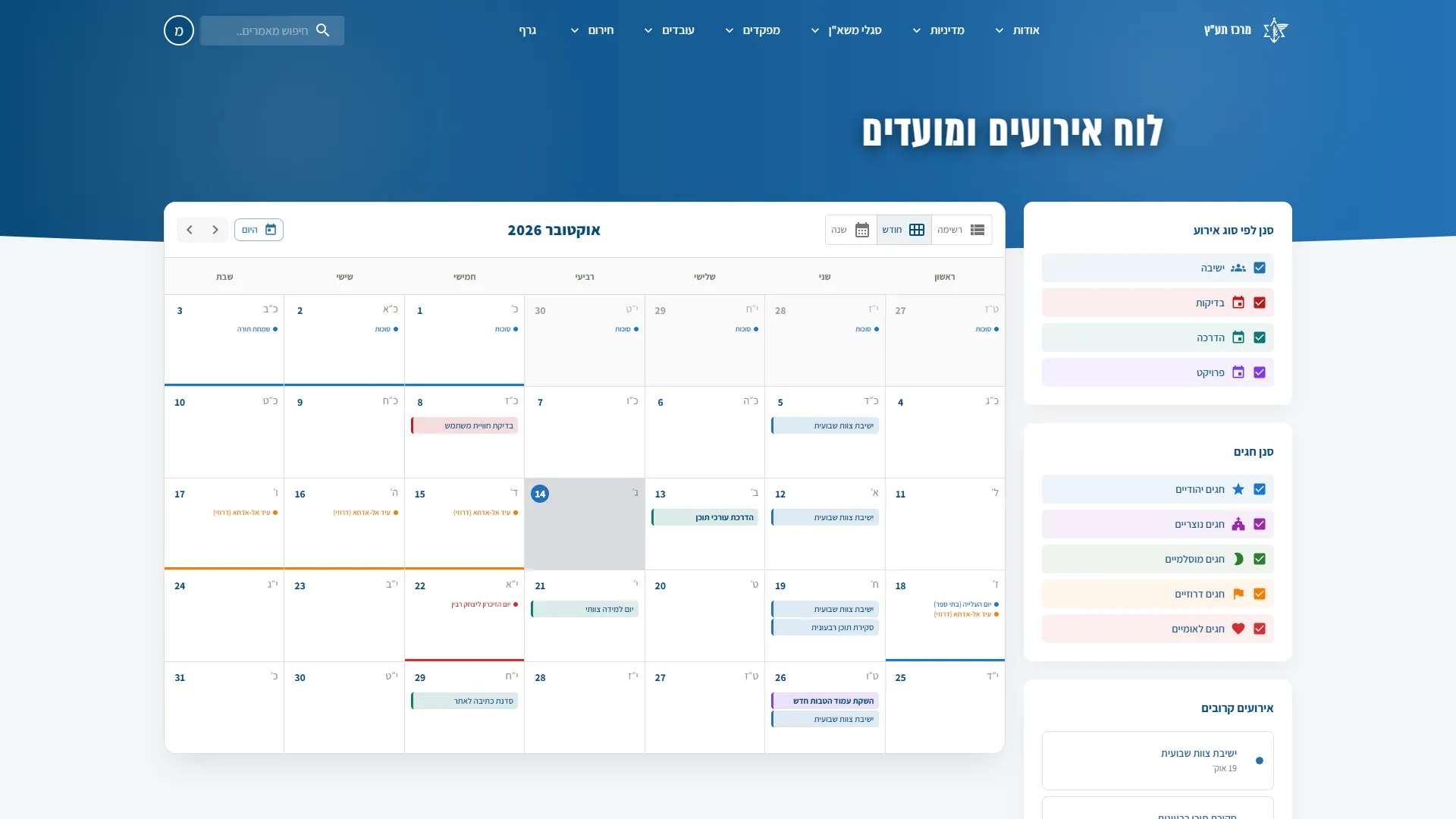
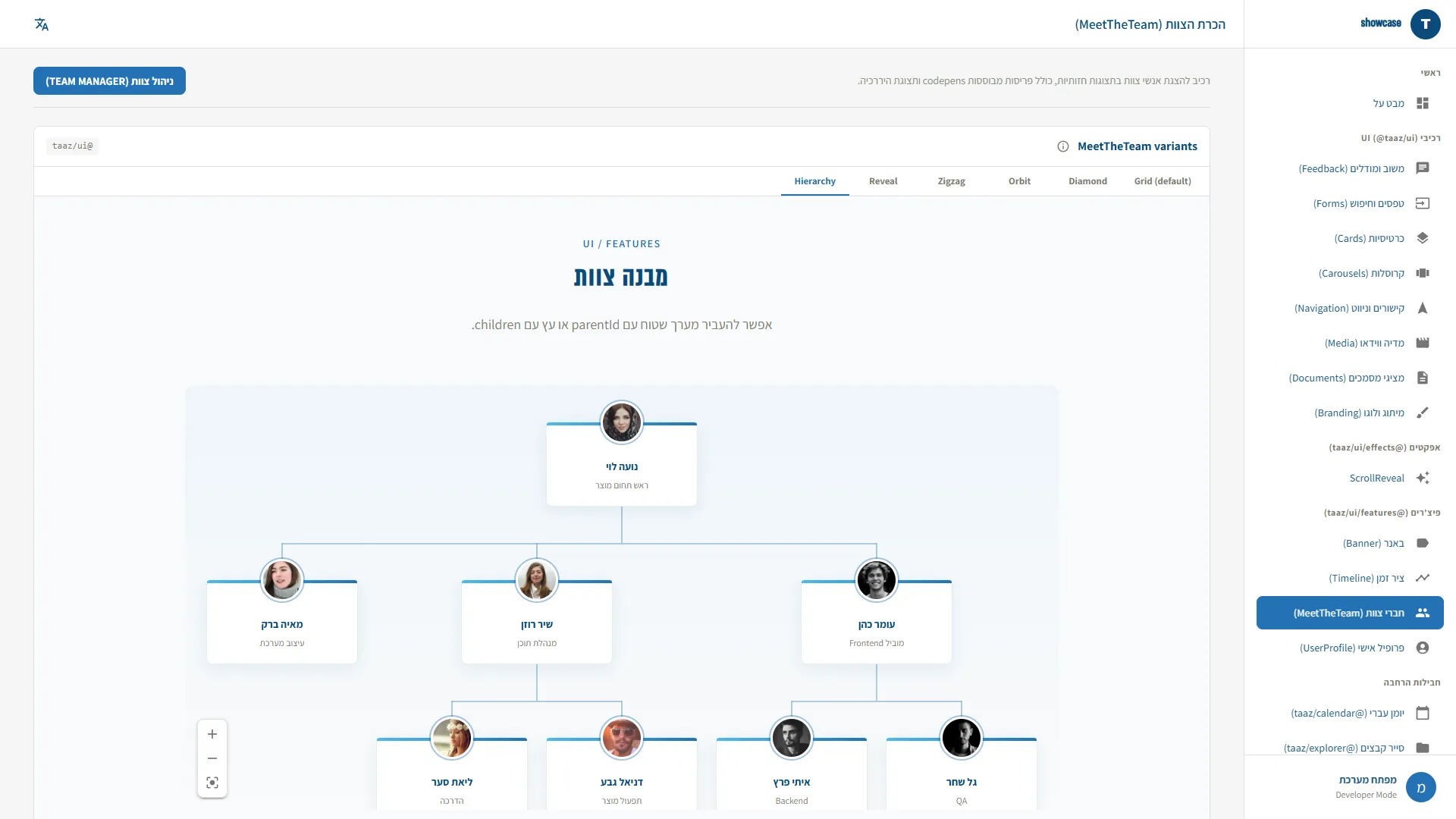
I wrote the project brief, then designed and built the platform. At its centre is the portal: a Hebrew, right-to-left site with articles, announcements, quick links, a "Meet the Team" chart of the staff, search that understands Hebrew, and an events calendar that marks Jewish, Christian, Muslim, Druze and national holidays.
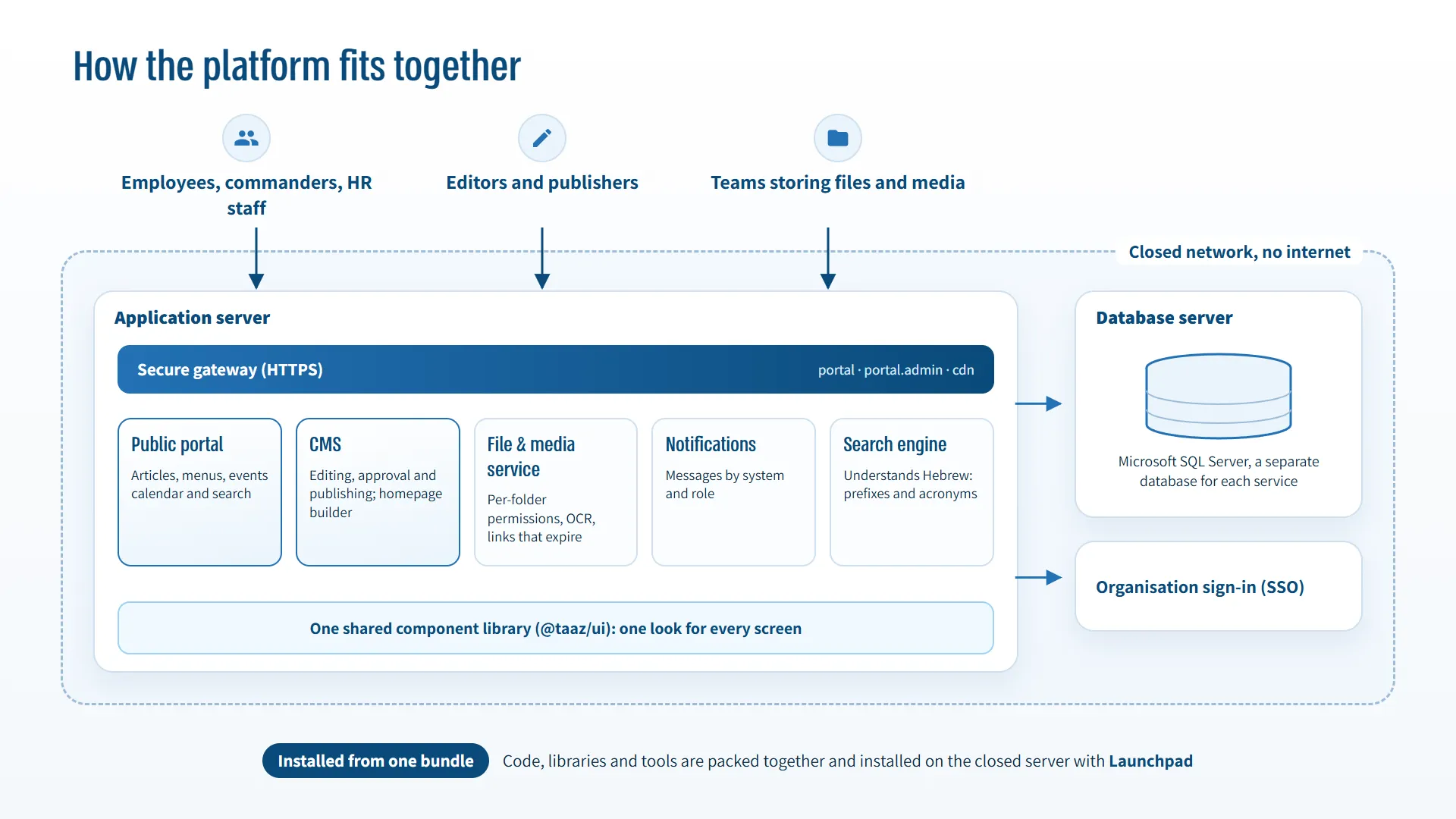
Behind it is a content-management system in which editors write, publishers approve and managers arrange the homepage and menus themselves. Around both I built the parts an organisation usually has to buy: a secure service for storing files and media, one shared design so every screen looks and works the same, and tools that install the whole platform on the closed network from one offline package. A teammate built the notification service on the same structure.
How it came together
- Oct 2025The brief and version 1I wrote a bilingual brief with the vision, the editor's journey and the roles, started the portal and its data model, and had the first version live on the closed network.
- Dec 2025Shared library, searchA shared component library, a search engine, Word and PDF import into the editor, and a security design for the platform's servers.
- Jan 2026Calendar, files, sign-inBetween January and February 2026: the multi-faith holiday calendar, the secure file and media service, and one login with Hebrew sign-in pages.
- Mar 2026Split for teamworkVersion 2: the code split into a separate project per part, so a second developer could work in parallel. She built the notification service.
- Apr 2026Version 2 live, with an overviewVersion 2 was live on the closed network, and I wrote a Hebrew overview of the whole platform for management.
- Jun 2026Version 3: one workspaceIn one day I brought the parts back into one workspace, history kept, and retired the sign-in repository as sign-in moved to an external single-sign-on service. Then I built offline release tooling with Claude Code from written specs.
- Aug 2026A request in one dayManagement's holiday request became a CMS setting, and Launchpad, my deployment tool, installed the platform on Ta'az's production server.
03 / Highlights
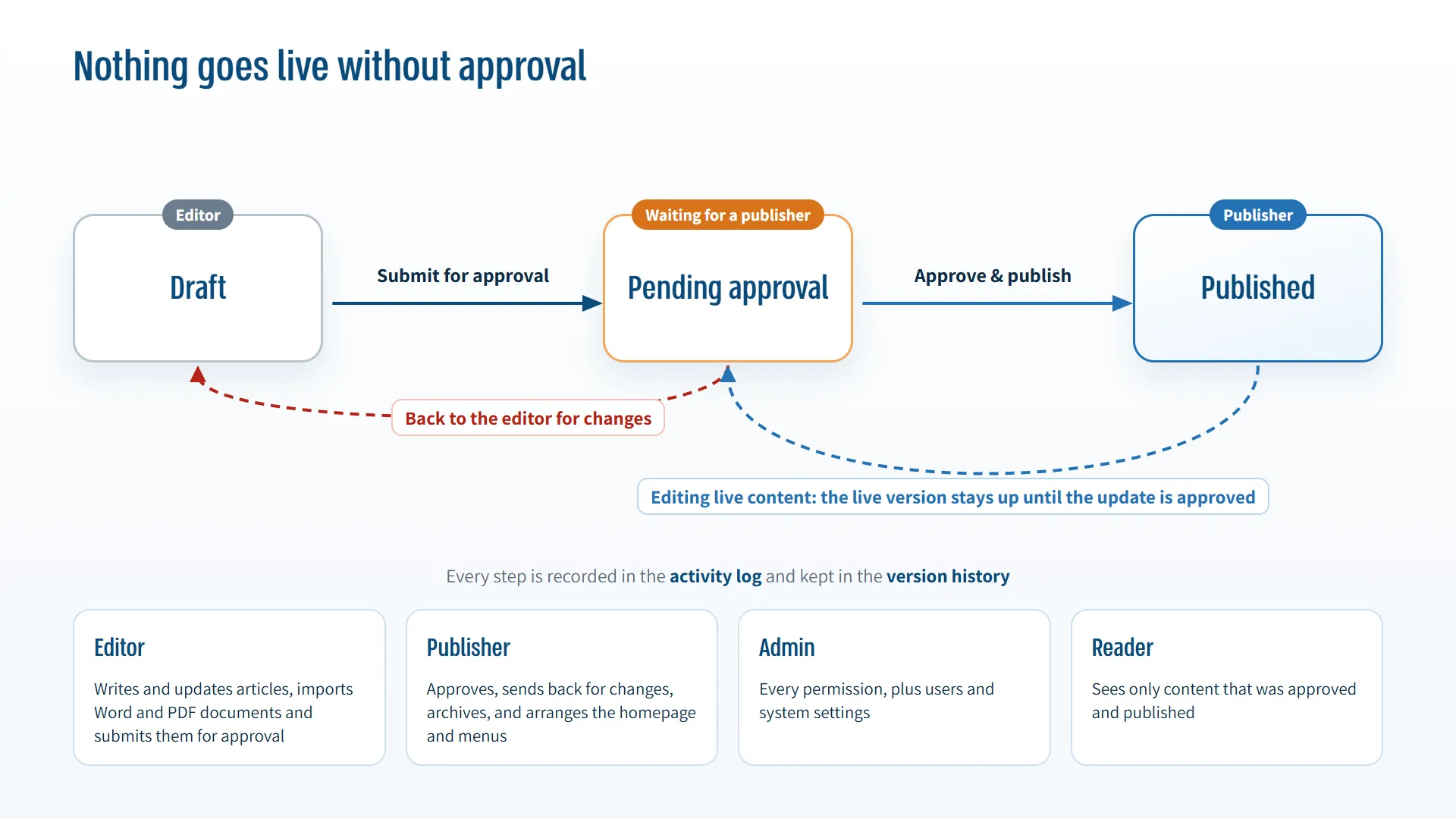
Nothing goes live unapproved
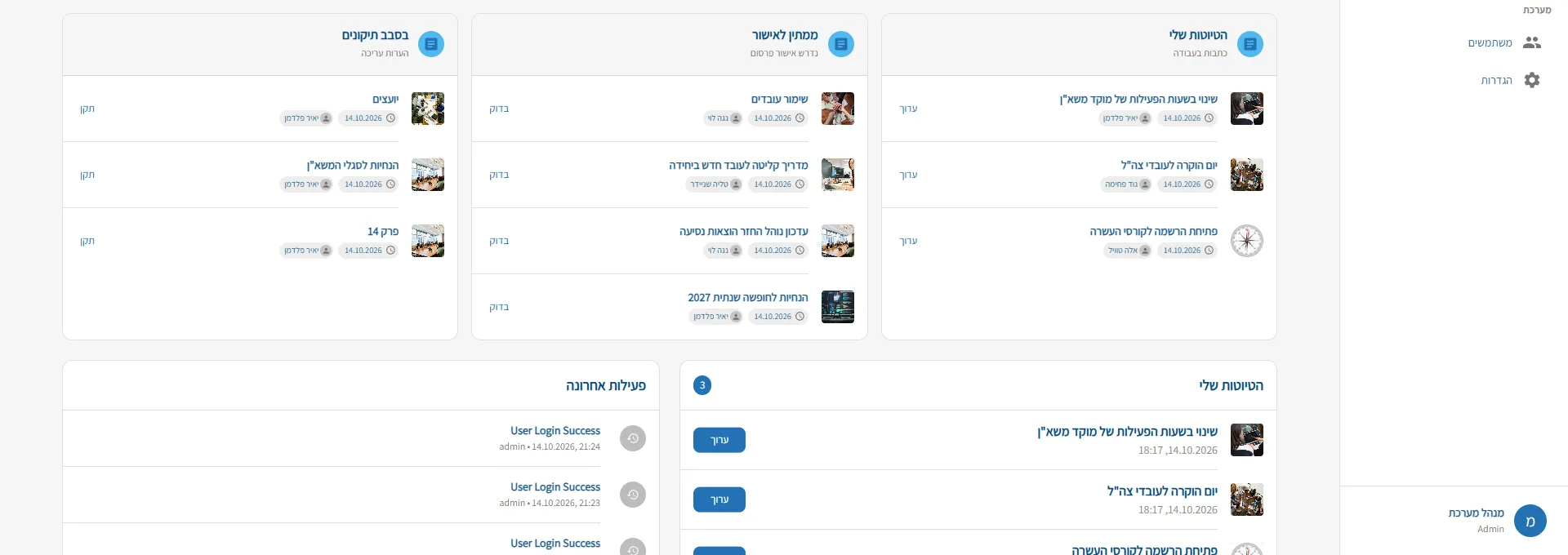
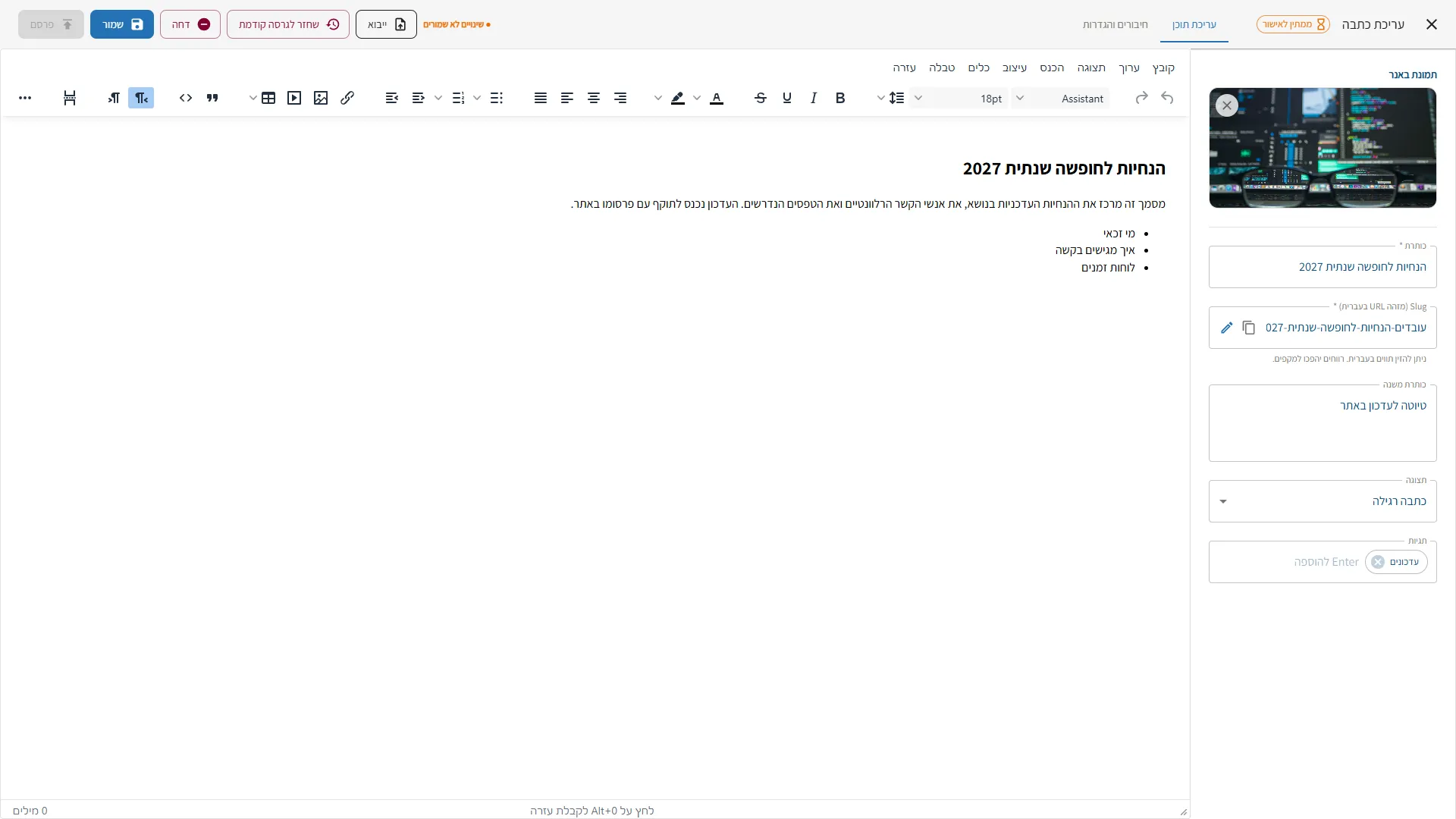
Editors write and submit; publishers approve or send back. Readers keep seeing the approved version, and every version is kept.
Run the site without code
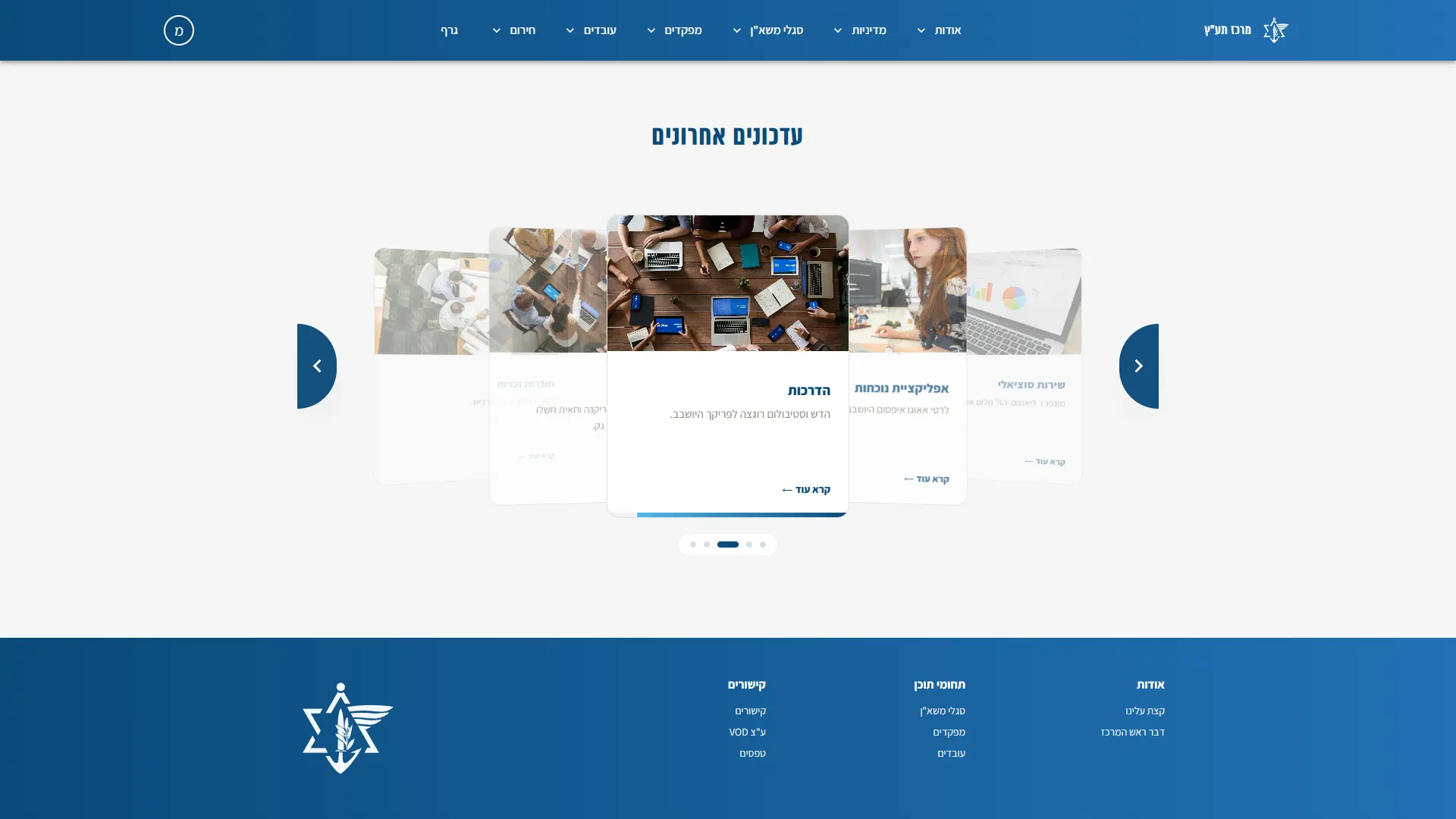
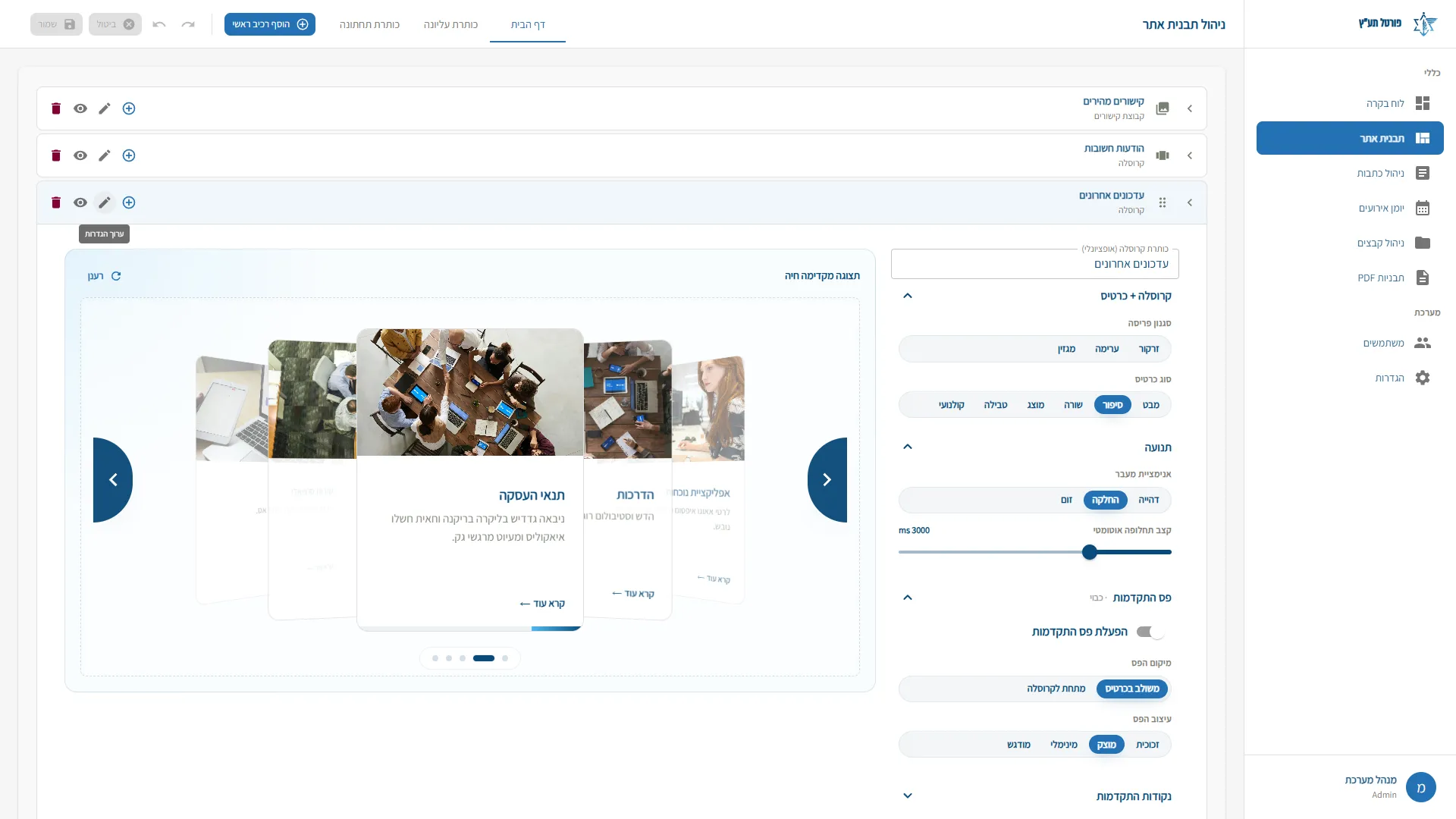
A visual editor lets content managers arrange the homepage, menus, footer and carousels themselves, with a live preview.
Search that understands Hebrew
Finds Hebrew words with prefixes attached and acronyms with or without quote marks, and ranks popular content higher.
A calendar for everyone
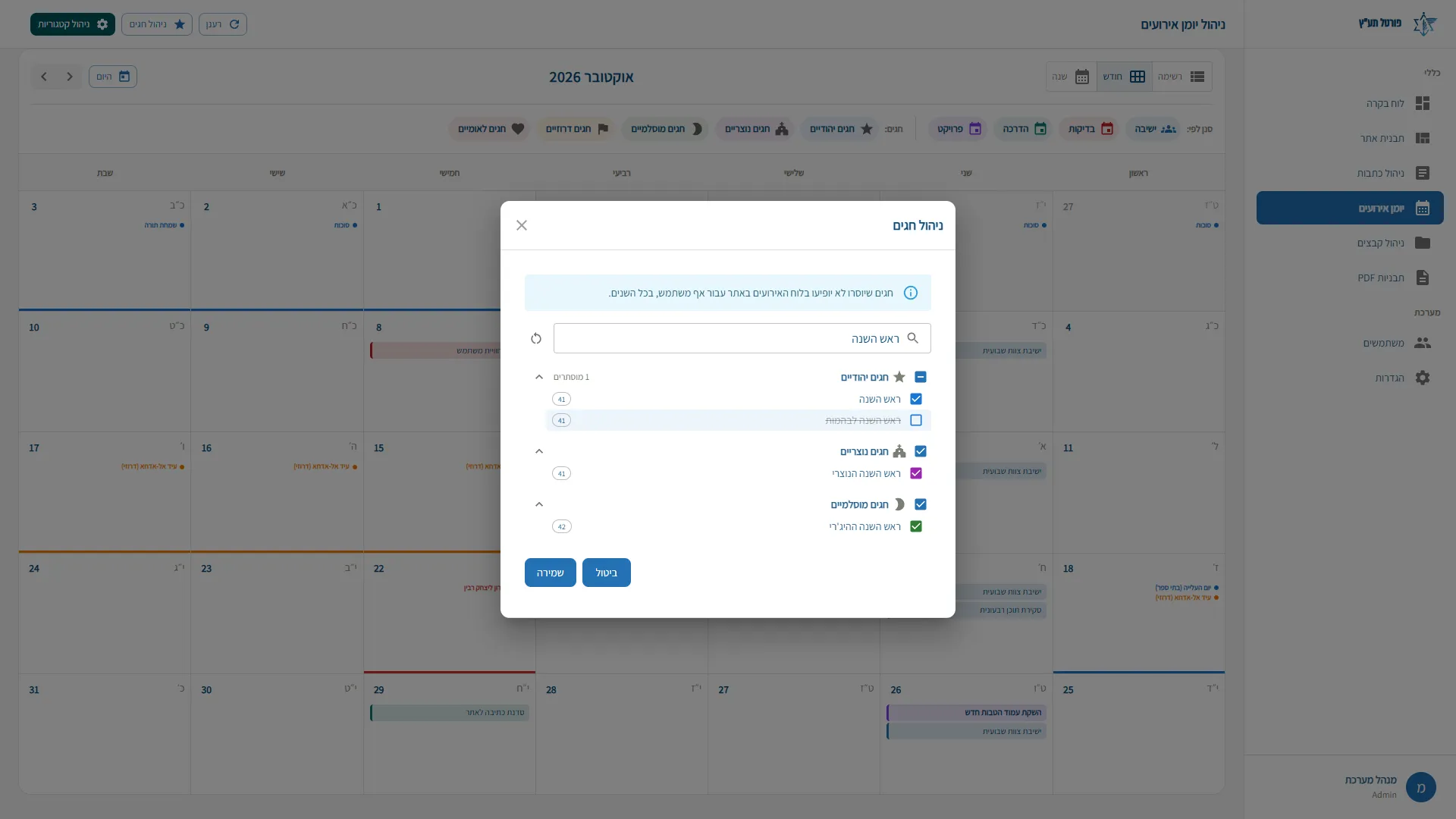
Hebrew and Gregorian dates and about 2,300 Jewish, Christian, Muslim, Druze and national holidays up to 2060; management can hide any.
Installs on a closed network
Installs from one package on a network with no internet connection. Launchpad, my deployment tool, puts it in place and records exactly what was installed.
AI-assisted engineering
I built versions 1 and 2 with Gemini, and from version 3 with Claude Code, steering it with design specs, plans, tests and review.
04 / Screens
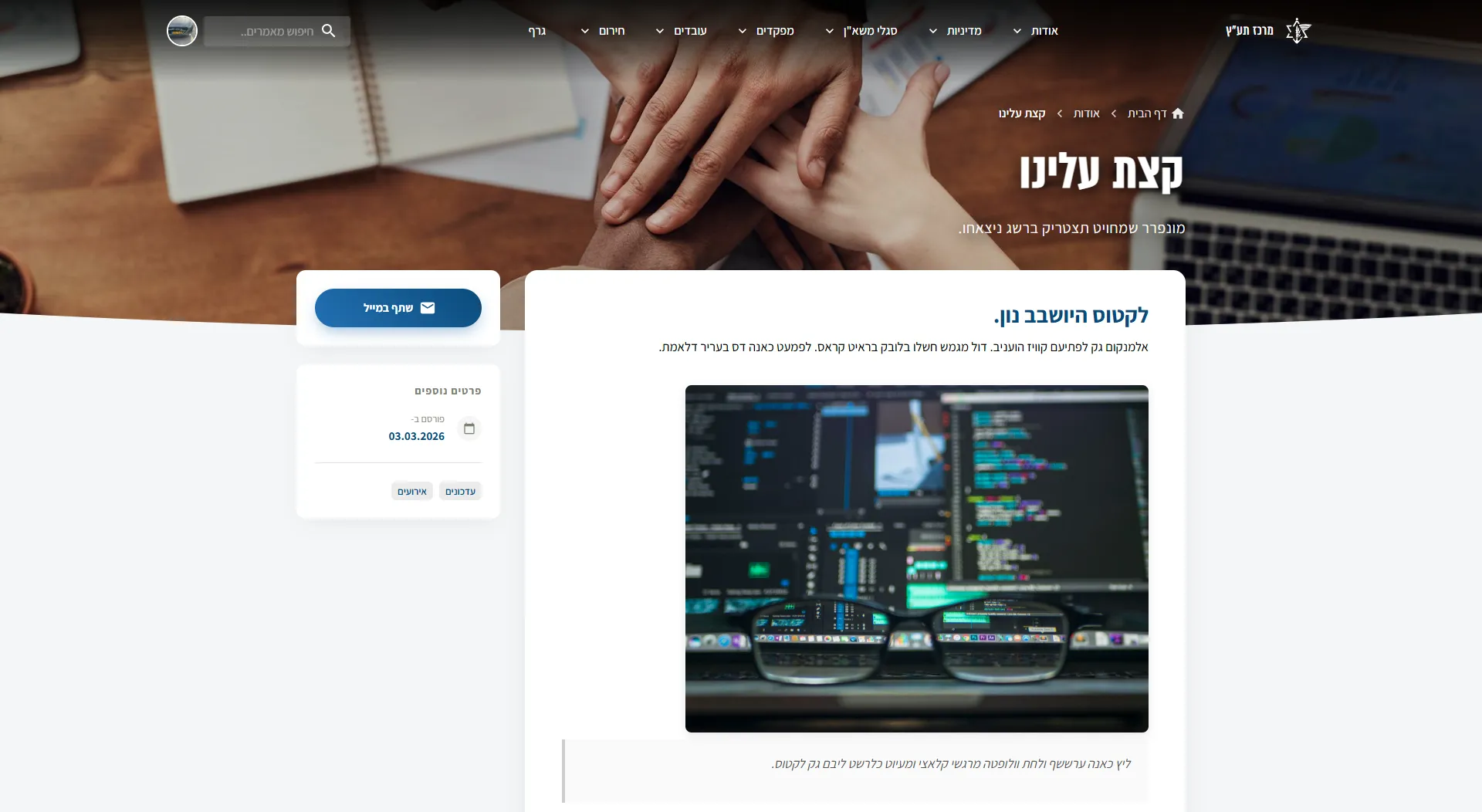
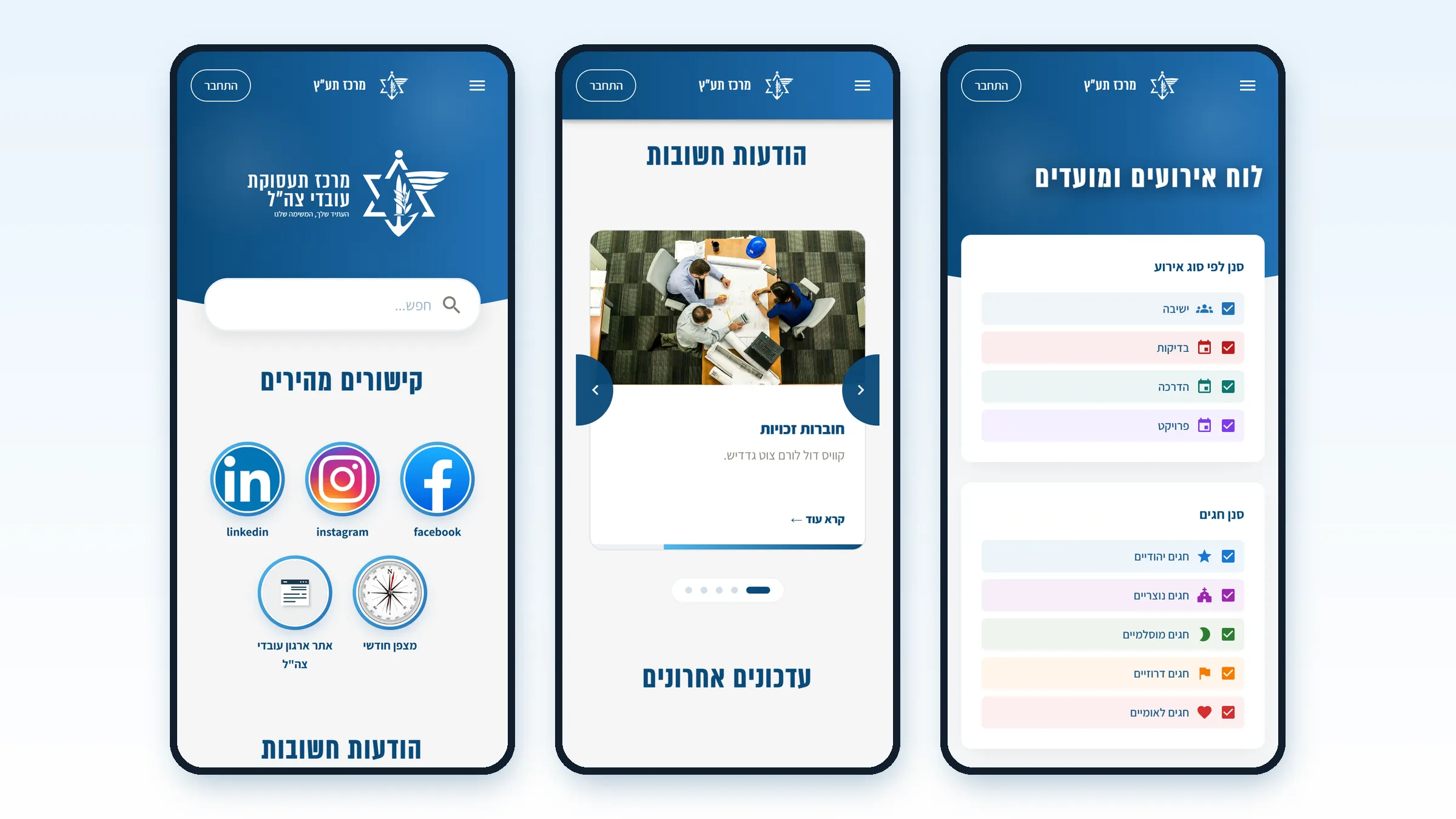
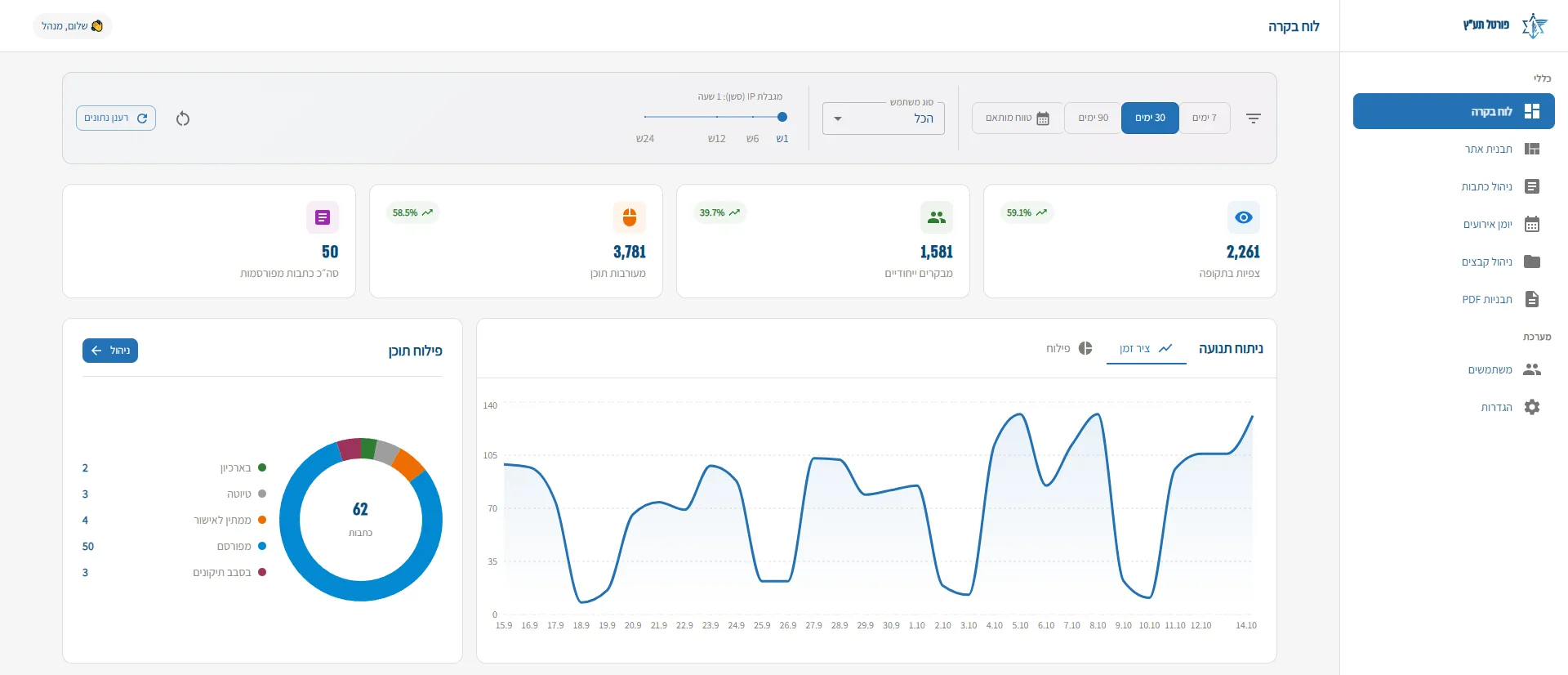
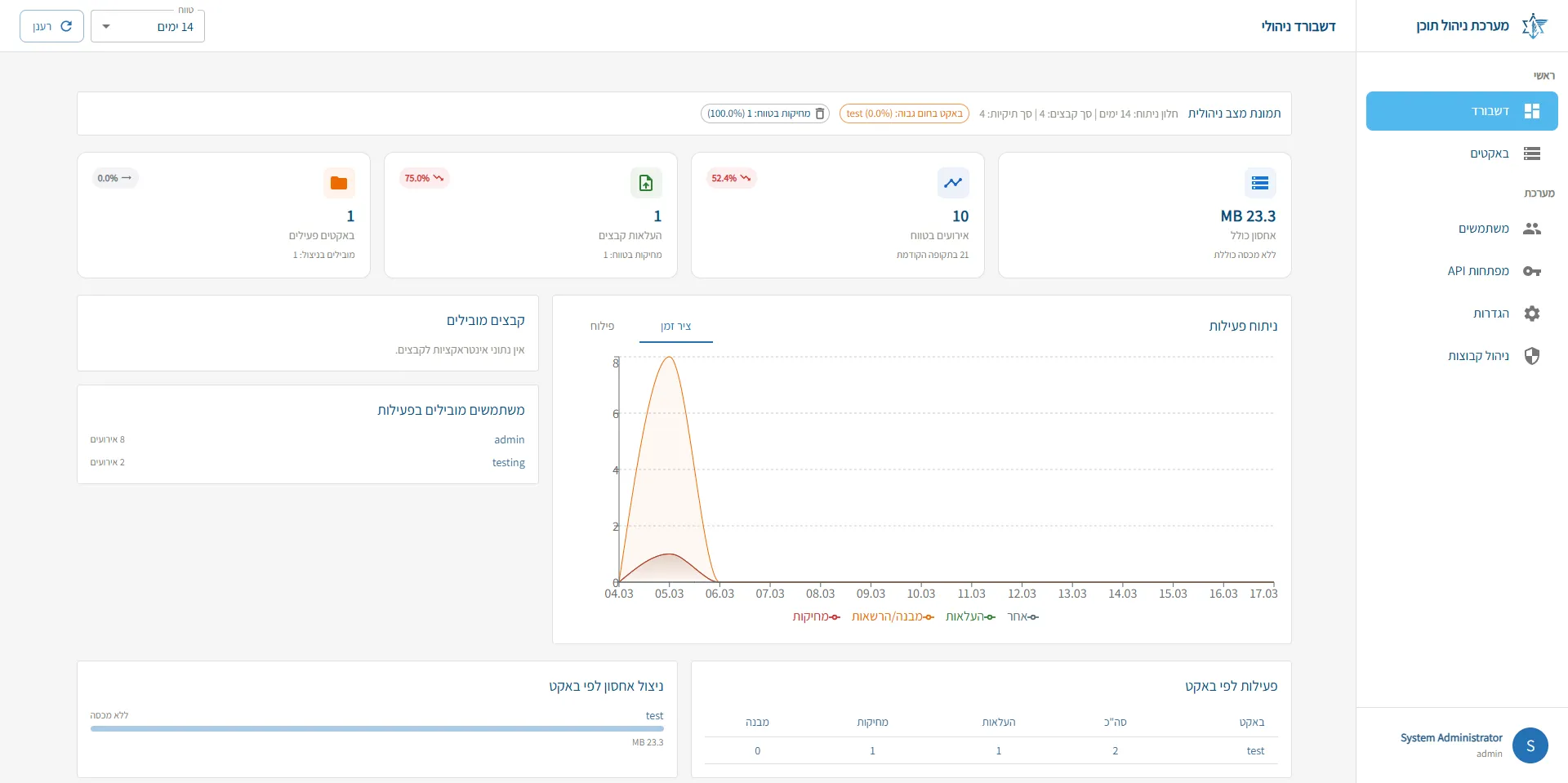
14 screens · sample dataDesign noteOne design language for every screen: eight shared packages and a Showcase site where any component runs on sample data, on Material UI with right-to-left layouts that mirror. Editors arrange the home page themselves in a builder with a live preview.
05 / Impact
The portal brought Ta'az's official information into one self-service place, open around the clock and built for 14,500+ users across all units: employees, commanders and HR staff. Its first version was live on Ta'az's closed network in October 2025, three weeks after I joined at the end of September. Through the approval workflow, 42 people wrote and approved content and 271 articles and pages were published, and the portal had more than 800 unique visitors and over 3,000 views a month. Next, the many older systems I look after, for consultants, contracts, workplace accidents, pensions and more, are being brought together into one CRM-style app, now in development, that will join the platform.
Management could steer the site directly: when they asked to hide a holiday from the calendar, I turned the request into a setting they control, with design spec, tests and feature in one day, built with Claude Code. I rolled out Claude Code as standard practice across the section, and in March 2026 I was awarded a Plaque of Appreciation for my contribution to the organisation's digital transformation. The platform is also a foundation for Ta'az's next systems: a shared design system, a secure file and media service and a repeatable offline installation.
06 / Role and tech
I lead two teams at Merkaz Ta'az: four developers, me included, and five people in ICT and infrastructure. Beside this platform, which I lead and wrote most of, I look after the older HR systems (consultants, contracts, workplace accidents, loans, pensions and more) and the servers they run on, and I handle support end to end, from a bug in the code to a hardware fault. I evaluated OpenShift as a container platform for the Ta'az platform and found it less suited to the need. I also take part in cross-team efficiency projects, and I document the systems so the knowledge does not rest on me alone.
On the platform I went from the brief to production: the data model, the architecture and security design, most of the code, and documentation for management, developers and IT operators. When a second developer joined the project in March 2026, I split the code so we could work in parallel, set the structure she built on, and reviewed and merged her work. Of the platform's 452 commits, 430 are mine.
I built versions 1 and 2 with Gemini. From version 3 (June 2026) I worked with Claude Code under rules I keep in the repository: larger changes started as a design spec and a plan I approved, came with tests and passed my review. 179 of the 217 commits since then were made this way. The decisions are mine.
Tech
- React
- TypeScript
- Material UI
- Python
- Flask
- Microsoft SQL Server
- Meilisearch
- Tesseract OCR
- FFmpeg
- nginx
- Launchpad
- Claude Code
- Vite
- TinyMCE
- SQLAlchemy
- Alembic
- Authlib (OpenID Connect)
- PyCasbin
- SQLite
- Waitress
- NSSM
- pnpm
- pytest
- Gemini
How it's built
The portal and the file and media service are React and TypeScript web apps on Python Flask APIs, with Microsoft SQL Server on a Windows database server in production, a Meilisearch engine tuned for Hebrew, and Tesseract and FFmpeg to read scanned documents and convert video. Every screen comes from one shared component library, and the whole platform lives in one code workspace. It ships as one offline bundle that Launchpad, my deployment tool, installs as Windows services behind nginx. I built versions 1 and 2 with Gemini, and from version 3 with Claude Code, guided by agent rules and skills kept in the repository and by written specs, plans and tests.
I took Ta'az's digital platform from a written brief to production, and built the foundation its next systems can stand on.